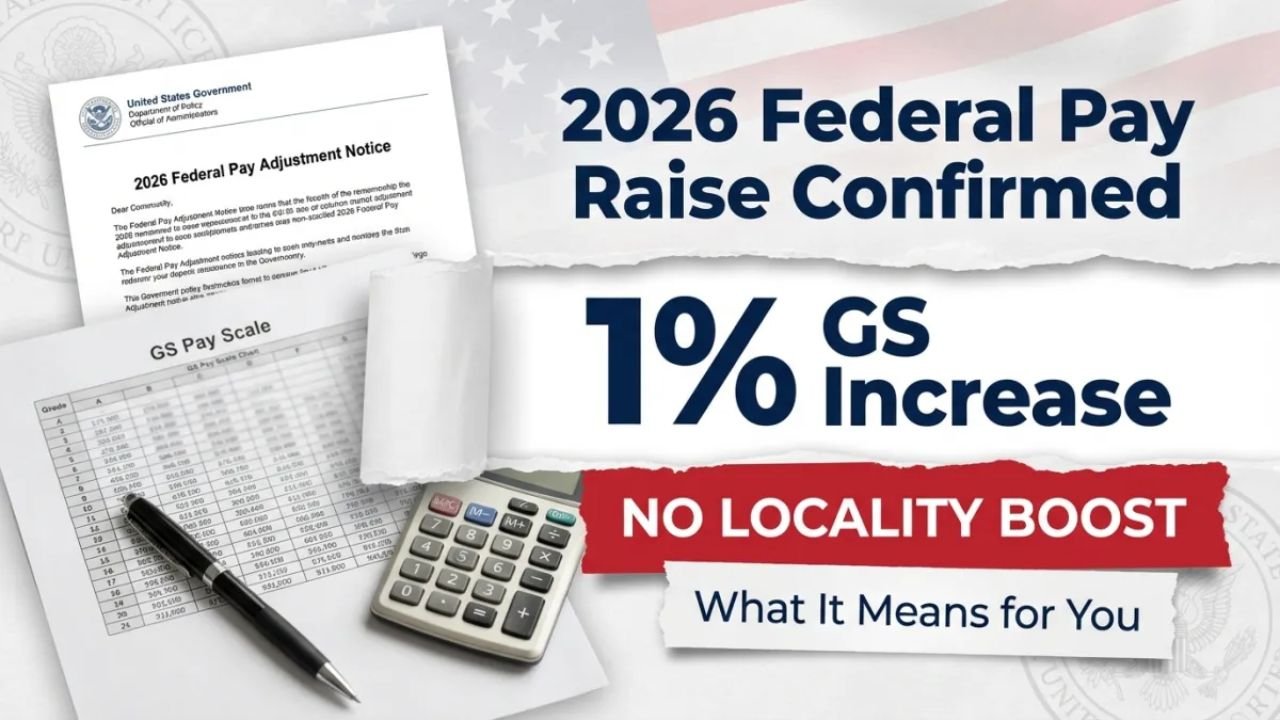
Federal employees are starting 2026 with a 1% base pay increase, approved through a presidential executive order. While annual raises are routine, this year’s update is notable because locality pay remains unchanged, meaning employees in high-cost cities won’t see extra adjustments. Here’s a clear breakdown of what this means for your paycheck, budget, and long-term planning.
2026 Federal Pay Raise Overview
The 1% base pay hike applies to most federal employees, including those under the General Schedule (GS) grades 1–15, Senior Executive Service, Foreign Service personnel, and certain legislative and judicial staff.
Key Details
- Effective from the first pay period on or after January 1, 2026
- Base pay only; no increase in locality pay
- Applied uniformly across eligible grades, with some agency-specific exceptions

Unlike previous years, employees in cities like Washington, DC, New York, or San Francisco will not receive a higher pay adjustment for living costs, making the overall impact smaller in expensive regions.
How It Compares to Past Years
| Year | Base Increase | Locality Adjustment | Notes |
|---|---|---|---|
| 2023 | 4.6% | Yes | Combined significant raise |
| 2024 | 5.2% | Yes | Largest increase in decades |
| 2025 | 4.7% | Yes | Base + locality combined |
| 2026 | 1% | No | Base only, modest impact |
The slowdown in 2026 reflects fiscal caution, budget planning, and moderated inflation.
Who Benefits from the 2026 Raise?
- Employees under General Schedule grades 1–15
- Senior Executive Service and selected Foreign Service staff
- Veterans Health Administration personnel
- Some law enforcement officers may qualify for additional adjustments, up to 3.8%, based on agency needs
Real Impact on Paychecks
- Example: A GS employee earning $60,000 annually will see roughly $600 extra over the year, about $50 per month before taxes.
- In high-cost cities, this increase may barely offset inflation in housing, transport, and childcare.
- Modest gains can contribute slightly to retirement benefits and pension calculations over time.
Why No Locality Pay Increase?
Locality pay is typically added to base pay to compensate for regional cost differences. In 2026, locality percentages remain the same.
- Employees in Washington, DC, New York, San Francisco, and other expensive areas receive no extra boost beyond the 1% base increase.
- Rising living costs may outpace this adjustment in certain regions.
Financial Planning Tips

Even a small raise can be used strategically:
- Review updated salary statements for correct grade and step placement
- Adjust retirement contributions or health insurance deductions
- Factor the increase into monthly budgeting for essentials and debt repayment
Quick Tips
- Verify your payroll update with your HR office
- Track potential pension effects from base pay increases
- Consider small adjustments in spending or savings to maximize benefit
FAQs About the 2026 Federal Pay Raise
1. What is the base pay increase for 2026?
1% across most General Schedule and statutory pay systems.
2. Is there a locality pay adjustment this year?
No. Locality pay percentages remain unchanged.

3. Who is eligible?
GS employees, Senior Executive Service, Foreign Service, some legislative/judicial staff, and selected agency personnel.
4. Can law enforcement officers get more?
Yes, some may see adjustments up to 3.8%, depending on agency authority and budget.
5. How much extra will a typical GS employee earn?
For example, $60,000 annual salary → approx. $600 yearly increase (~$50/month before taxes).
Conclusion
The 2026 federal pay raise provides a modest boost to base pay but does not include locality increases, limiting benefits for employees in high-cost regions. While the 1% hike may not dramatically change monthly finances, careful budgeting and attention to retirement contributions can help maximize the impact.
Employees should check updated payroll tables and HR communications to confirm their specific pay adjustments and plan accordingly for 2026.